
Genomic Sequencing & Biosecurity Protocols for Indigenous Fish Species
About the Project
This scientific initiative focuses on whole-genome mapping and high-throughput marker discovery for commercially vital indigenous fish species, including Rui (Labeo rohita), Catla (Gibelion catla), and endangered riverine Pabda and Gulsha.
Conducted jointly with the Department of Fisheries Biology and Genetics at Bangladesh Agricultural University, the research aims to reverse inbreeding depression, document phenotypic traits, and formulate standard breeding protocols for commercial hatcheries nationwide.
The program integrates cryopreservation of germplasm, biosecurity zoning, and disease resistance benchmarking to establish verified genetically superior brood banks.
Project Objective
To map the genetic architecture of native finfish species, preserve indigenous genetic diversity, and develop pedigree-tracked breeding protocols that enhance growth rates while maintaining high disease tolerance.
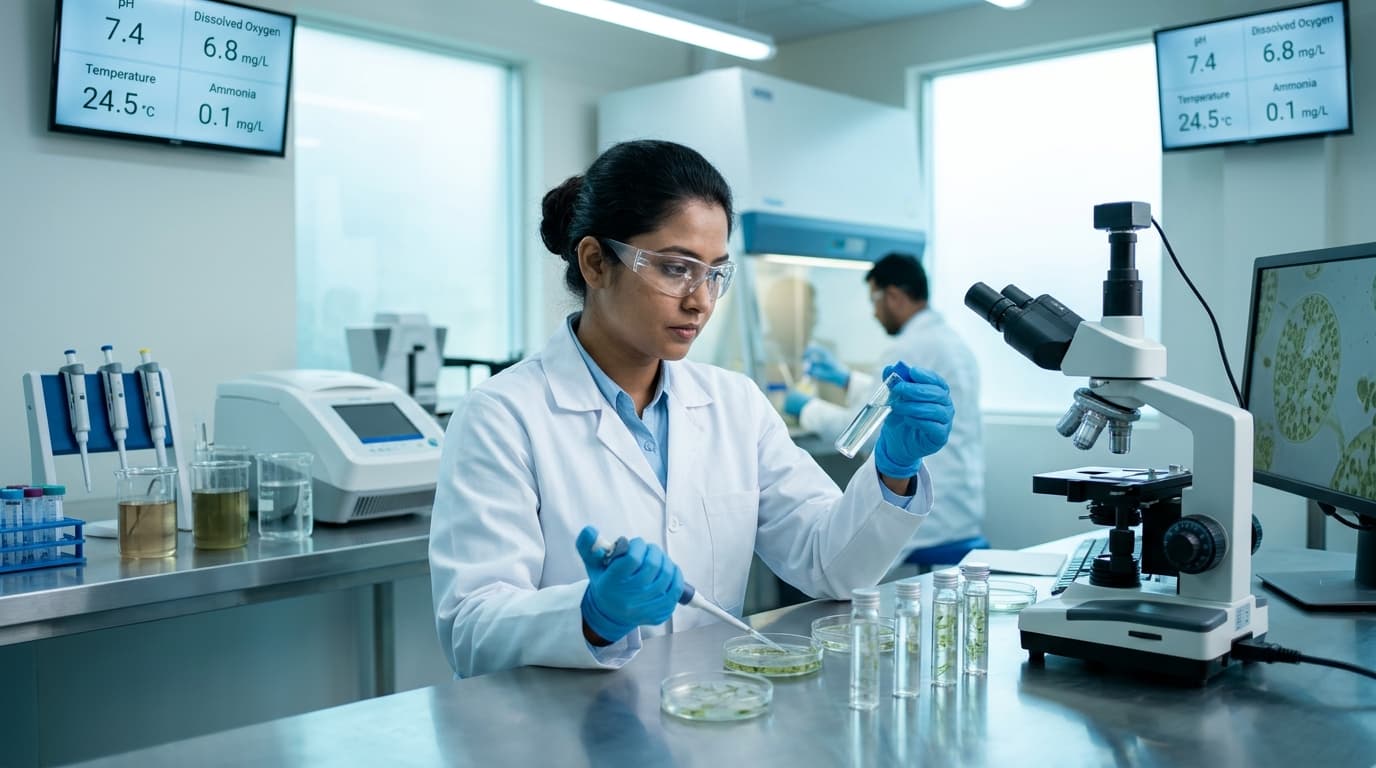
The Molecular Genetics & Cryo-Preservation Laboratory
Research operations are headquartered at our climate-controlled analytical genetics facility equipped with thermal cyclers, gel documentation systems, and ultra-low temperature liquid nitrogen bio-banks.
The facility maintains cryopreserved milt repositories for over 45 elite native brood families, providing an invaluable genetic safeguard against environmental degradation.
Collaborative research teams perform regular parentage analyses and pedigree tracing before seed propagation to prevent wild-stock contamination.
Fostering Academic-Industrial Research Synergy
Graduate and doctoral scholars from partner universities conduct their thesis research within our active field facilities, bridging academic theory with commercial hatchery operations.
The program sponsors full fellowship stipends, providing young geneticists hands-on training in DNA extraction, PCR amplification, and bio-informatics sequence assembly.
Key Components
Genome-Wide Association & Marker Discovery
- Identification of single nucleotide polymorphisms (SNPs) correlated with rapid juvenile growth and thermal shock resilience.
- Establishment of digital genotyping reference databases accessible to national fisheries researchers.
Cryogenic Broodstock Milt Banking
- Protocol standardization for long-term cryopreservation of native catfish and carp milt with post-thaw motility exceeding 80%.
- Distribution of tested cryo-aliquots to regional partner hatcheries during seasonal breeding peaks.
Biosecure Hatchery Standard Operating Procedures
- Creation of certified quarantine and biosecurity manuals for broodstock isolation, disinfection, and disease surveillance.
- Periodic screening for emerging viral and parasitic agents using validated molecular assays.
Key Activities
- Field collection and tissue sampling of wild broodstock from Padma, Jamuna, and Halda rivers
- High-throughput genomic DNA sequencing and bio-informatics filtering
- Breeding trials comparing cross-bred progeny against standard hatchery control cohorts
- Hands-on technical workshops for private hatchery owners on pedigree recording
- Publication of open-access genome annotations and breeding advisories
Expected Outcomes
The project will contribute to:
- 15–20% improvement in growth performance across second-generation selected lines
- Reduction of hatchery inbreeding coefficient below 1.5%
- Establishment of Bangladesh's first cryo-preserved native milt repository for commercial use
- Training of over 120 hatchery managers in genetic diversity preservation