Aquatic Food Innovation Hub for Island Food Systems
About the Project
The 'Promoting Climate-Resilient and Sustainable Blue Economies – Aquatic Food Innovation Hub' project is a multi-year initiative supported by the Asian Development Bank (ADB) that strengthens youth skills, student-led research, scientific capacity, and innovation for resilient coastal and island food systems.
Led by Fishtech BD and delivered through our coastal marine innovation hub, the project builds on years of regional research. It responds to growing challenges facing aquatic food systems, including climate change, rising salinity, and increasing dependence on imported broodstocks. At the same time, it seeks to create new opportunities for young researchers to build practical skills, contribute to cutting-edge research, and help shape sustainable food futures.
The project is integrated within national fisheries modernization priorities, focusing on food frontiers, aquatic health security, youth development, research capacity, and climate resilience across coastal ecosystems.
Project Objective
To strengthen scientific skills, research capacity, and technological innovation for resilient coastal and island food systems through youth engagement, practical training, applied marine research, and partnership-based learning.
The Coastal Innovation Hub
At the centre of the project is the Fishtech Coastal Innovation Hub, a practical learning, research, and innovation platform operated in strategic coastal belts.
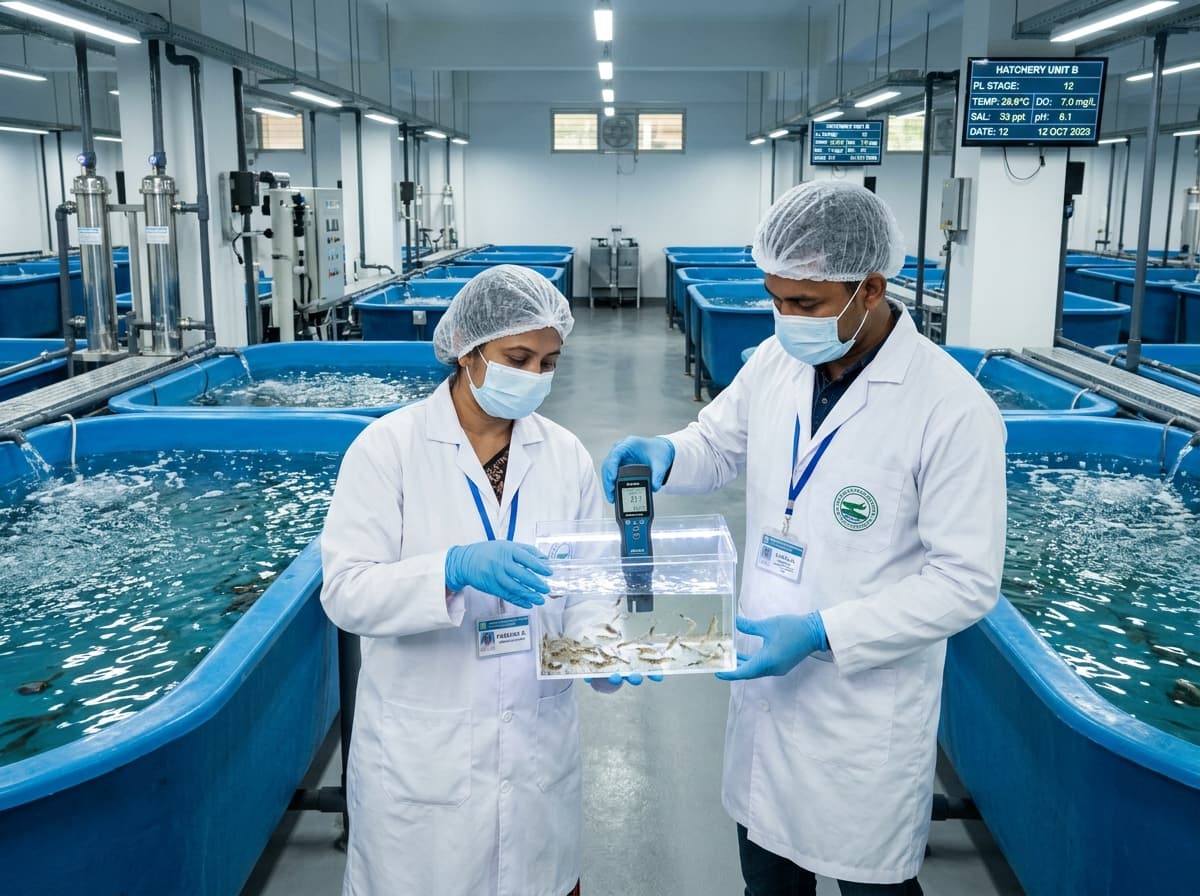
The hub brings together students, researchers, government agencies, community members, and development partners to test ideas, share knowledge, and develop practical solutions for sustainable and climate-resilient aquatic food systems. Through live pond demonstrations, training, co-learning, and applied research, the hub provides a space where innovation can be tested and adapted to local realities.
The hub is closely connected to national and international partners including the Department of Fisheries, coastal universities, research institutes, local hatchery associations, and coastal fish farming communities.
Building the Next Generation of Aquatic Food System Leaders
A central focus of the project is creating opportunities for young people and graduates to develop practical scientific skills while contributing directly to national research and innovation.
Working with leading agricultural and maritime universities, the project supports student-led research, youth internships, immersive learning experiences, and new pathways into careers in aquaculture science and sustainable development. By placing young scientists at the centre of inquiry, the project aims to strengthen national research capacity while ensuring future agendas are grounded in local knowledge and lived experience.
Key Components
Gender Strategy and Inclusive Action Plan
- Developing a comprehensive strategy to reduce barriers that limit participation in training, research, and innovation opportunities, particularly for women and young researchers.
- The strategy guides future investments in inclusive capacity strengthening and supports greater participation in coastal aquaculture research and hatchery management.
Training and Innovation Assessment
- Reviewing and documenting innovative technologies and field practices that support climate resilience in aquatic food systems.
- This work identifies lessons from existing initiatives and helps inform future training and technology scaling programs across coastal communities.
Education and Scientific Capacity Building
- Strengthening practical skills development through community training, peer-to-peer learning, and formal partnerships with national universities.
- The project supports the development of an education and capacity building plan to guide future learning opportunities in biosecurity and marine biotechnology.
Student Research and Scientific Mentorship
- Creating opportunities for university postgraduate students to undertake applied research projects through on-site laboratory facilities.
- The project supports research supervision, small-scale research grants, and stronger links between students, senior researchers, and industry priorities.
Key Activities
- Community-based training on sustainable and climate-resilient food system practices
- Youth internships and specialized laboratory diagnostic development programs
- Student-led research projects on pathogen-free bio-floc nursery scaling
- Innovation assessments and technical field demonstration workshops
- Development of training and educational manuals for hatchery technicians
- Gender and social inclusion planning across smallholder farming networks
- Knowledge exchange and bilateral university partnership development
- Research communication, scientific paper publishing, and policy advocacy
Expected Outcomes
The project will contribute to:
- Increased access to skills training and lab certifications for women and young people
- Stronger scientific, diagnostic, and disease surveillance research capacity
- Greater participation of university students in applied aquaculture research
- Improved farmer adoption of climate-resilient food system innovations
- Establishment of verified zero-antibiotic microbial protocols in commercial ponds